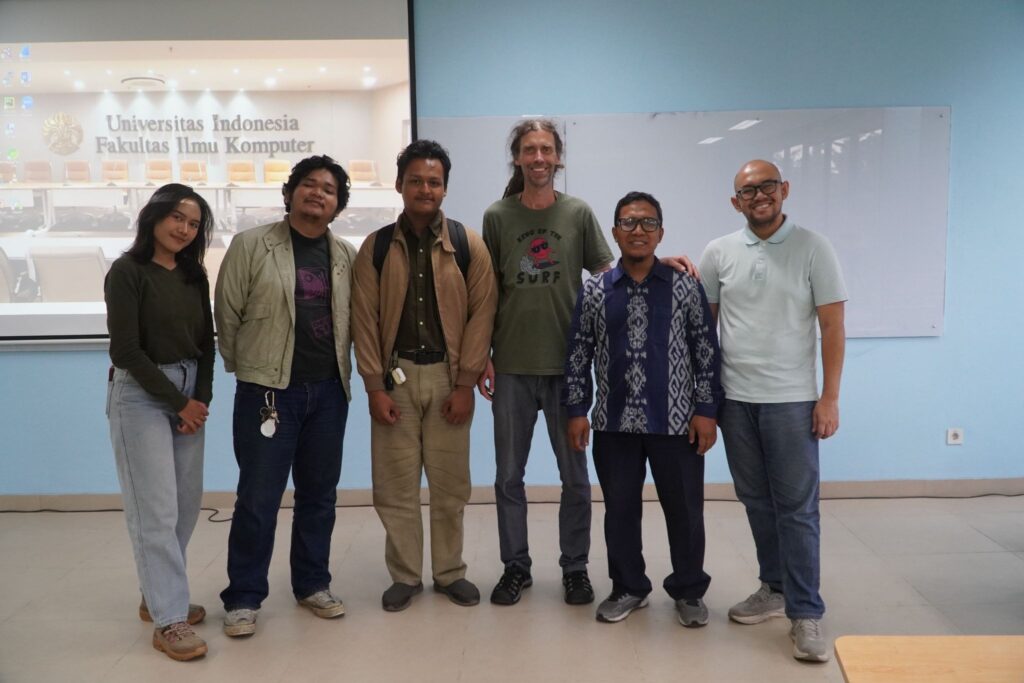

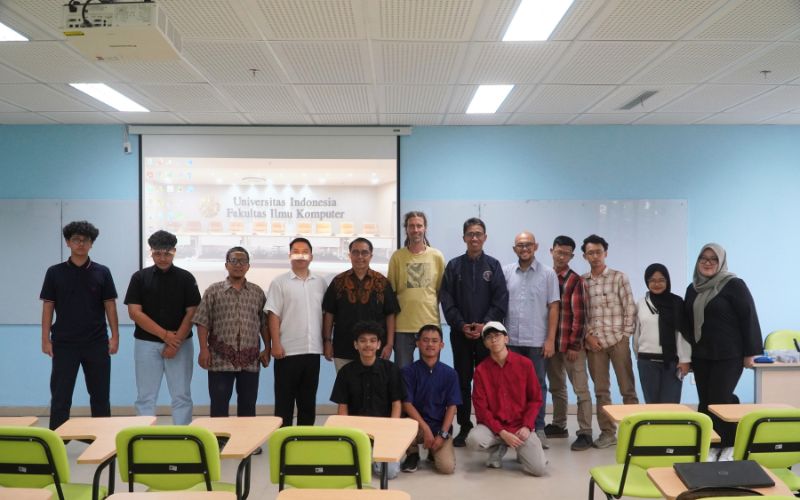
As part of the Erasmus+ KA171 programme, Assoc. Prof. Jan Pidanič from the Faculty of Electrical Engineering and Informatics at the University of Pardubice completed a teaching and professional mobility stay at the Faculty of Computer Science, University of Indonesia. The main focus of the stay was teaching aimed primarily at master’s and doctoral students, as well as the further development of long-term cooperation between the two universities.
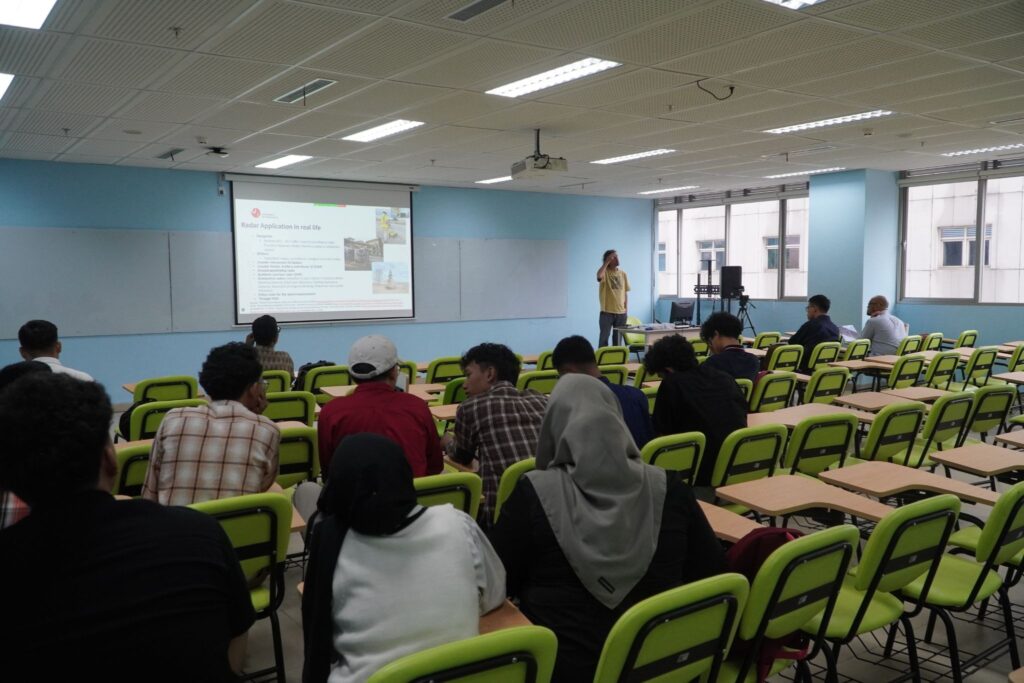
The key teaching activity was the intensive course Analysis of the Impact of Wind Power Plants on Radar Systems. Using a specific interdisciplinary topic, the course demonstrated the application of signal processing, mathematical modelling, simulation and real-world data analysis. The lectures were complemented by practical demonstrations and MATLAB-based sessions. Students were introduced to the fundamentals of radar systems, the modelling of reflections from wind turbines, the evaluation of measured data and software-based approaches to mitigating interference. Approximately 30 participants attended the course, both online and on site.
Emphasis was placed not only on explaining the technical problem, but particularly on connecting theory with practical problem-solving, interpreting simulation results and understanding the entire process—from the physical phenomenon and data acquisition to data processing and evaluation. The course therefore supported the development of the students’ technical and digital competences and provided an example of how computational tools can be used to address a real-world engineering problem.
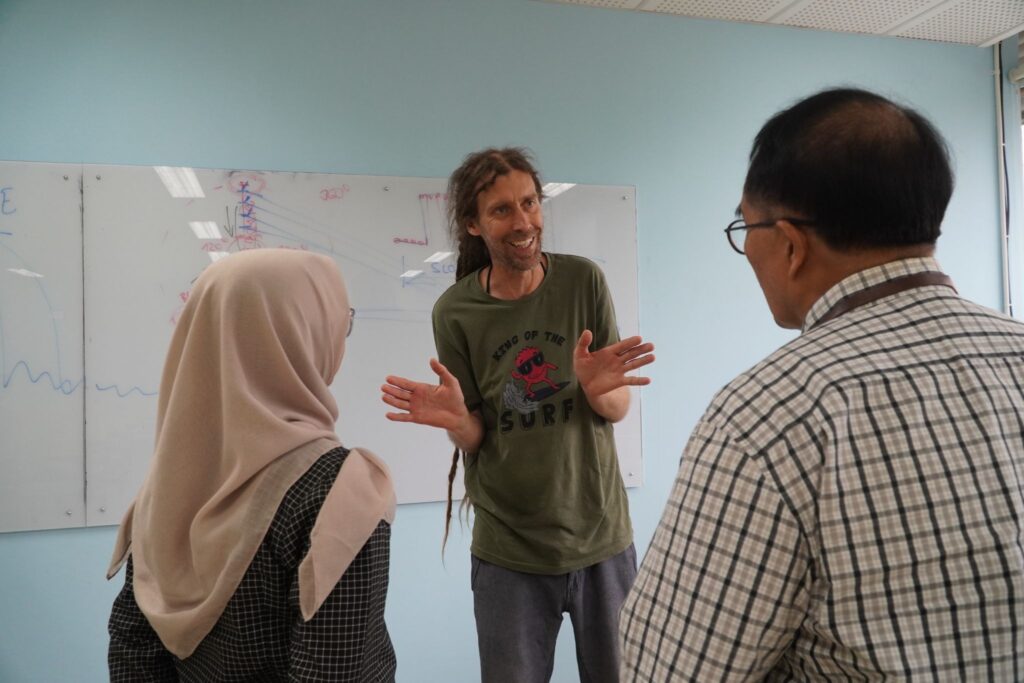
Consultations with master’s and doctoral students were another important part of the mobility. Discussions covered master’s thesis and doctoral dissertation topics, the selection of appropriate research methods, experimental design, data processing and interpretation, and the preparation of research results for academic publications. Consultations were also held with supervisors and academic staff at the host university, allowing both sides to compare their approaches to thesis supervision and doctoral education.
The stay also supported joint publication and project activities. Consultations were held on academic papers currently in preparation, together with discussions on further cooperation in the areas of data processing, embedded and IoT systems, applied artificial intelligence and digital governance. The meetings also addressed opportunities for joint student supervision, the preparation of further publications, the development of teaching activities and participation in future international projects and mobility programmes.
The mobility also contributed to a better mutual understanding of the Czech and Indonesian academic and cultural environments. Face-to-face meetings with students and staff at the University of Indonesia provided opportunities to share experience in the organisation of teaching, student supervision, university operations and approaches to social and technological issues in different national contexts. This exchange supports the development of intercultural competences, mutual respect and long-term personal and institutional relationships.
The content of the mobility was also aligned with the main priorities of the Erasmus+ programme. Computational modelling, data processing and the use of digital teaching tools supported the digital transformation of education. The course’s focus on the coexistence of renewable energy sources and technical infrastructure contributed to the themes of environmental sustainability and the green transition. International teaching and mutual cultural exchange also promoted social and intercultural competences, openness and shared European values. These areas are among the horizontal priorities of the Erasmus+ programme for the 2021–2027 period.
The Erasmus+ KA171 mobility was therefore more than a one-off teaching visit. It created further opportunities for systematic cooperation between the University of Pardubice and the University of Indonesia in international education, student supervision, joint research, publication activities and the preparation of future projects.